A wet basement in London, Ontario rarely comes down to one culprit. It is usually a chain of small vulnerabilities that add up when snowmelt and spring rains hit saturated clay soils. I have walked into countless homes where the owner points to one crack and asks for a magic sealant. Most of the time, the fix is a sequence of drainage upgrades that move water away from the foundation at every stage, from the eavestroughs to the footing drains. Done right, the result is not only a dry basement, but also a healthier home and a more stable foundation.
This piece lays out how I think through a wet basement in London. It is rooted in the way the ground and weather behave here. We live with heavy clays that hold water, a freeze-thaw cycle that pries at small gaps, and periodic cloudbursts that overwhelm undersized gutters and old storm infrastructure. With that context, the right plan becomes a lot clearer.
Why basements get wet here
Southwestern Ontario’s soils, particularly the clays common through London, drain slowly. After a steady rain, hydrostatic pressure builds along the foundation wall. If the wall is concrete block, the hollow cores can fill and weep through mortar joints. If it is cast-in-place concrete, hairline cracks can turn into capillary pathways. Even a poured wall with no visible cracks can seep where the wall meets the footing. Add in older homes with combined or undersized sewers, and you see why basement waterproofing in London, Ontario is a steady trade.
Grade plays a part. Many mid-century lots settled over time, leaving patios and plant beds sloped back toward the house. Then the eavestroughs clog, or the downspouts dump thousands of litres beside the foundation. The first time you watch a June thunderstorm fill a 20-metre eavestrough, you understand how quickly that water can overwhelm a single elbow and a short splash block.
There is also the issue of time. The original exterior coating on a foundation might have been damp-proofing from the 1960s or 70s, essentially a thin asphalt paint. It slows moisture vapor, but it is not a true waterproofing system. Footing drains, called weeping tile even when they are plastic, can clog with fines. I have excavated alongside footings and found terracotta tile choked with sediment and roots, still technically present but functionally useless.
Finally, consider the shoulder seasons. Snow piled along the house melts against a still-frozen surface. Water has nowhere to go but down the wall. If the sump discharge freezes or terminates too close to the foundation, you end up recirculating the same water, pump running constantly while the soil never has a chance to dry.
Understanding these patterns drives the choice of upgrades. You want to collect, convey, and relieve water before it ever becomes a basement problem.
Start with a structured assessment
I begin at the roofline and work to the footings, then I check the interior for signs of chronic moisture. Small details, like the pitch of a downspout extension or the height of a window well, matter more than many people think. I also confirm where the sump pump discharges and whether there is a backwater valve on the sanitary line. In London, routing sump water into the sanitary sewer is typically prohibited, and for good reason. It should discharge to grade or to an approved storm connection if one exists.
A quick note on language helps frame the strategy. Basement waterproofing is a system, not a product. Paint-on coatings have their place, but they do not replace proper drainage. Foundation repair is a separate, sometimes related scope. A structural crack or bowing wall needs its own plan, even if drainage upgrades will reduce future movement.
Roof drainage that actually keeps up
The roof is your first collection point. If your eavestroughs are undersized or out of pitch, you are pushing water problems downstream.
I like 5-inch gutters for most detached homes, and 6-inch on larger roof areas. The difference in capacity is meaningful during a summer downpour. Ensure at least one downspout per 600 to 800 square feet of roof, and add more if a steep pitch concentrates flow. Good installers will check for proper slope toward outlets, typically a subtle 3 millimetres per metre, and they will use large outlets to avoid bottlenecks.
Screens or guards help, but they are not a substitute for cleaning. London has tree-lined streets, and in fall the debris load can be remarkable. I have cleared gutters that looked fine from the ground and found a felt-like mat stopping flow. Water was spilling over the back of the trough and soaking the fascia and wall.
Downspout termination is where many basement problems begin. Send the discharge at least 2 to 3 metres from the foundation, ideally to a point that slopes away. Flexible extensions are fine in a pinch, but rigid piping, gently sloped and supported, holds up better over time. If you use buried extensions, sleeve them in smooth-wall pipe rather than corrugated, include a cleanout, and plan an outlet that will not ice up at the first cold snap.
Surface grading and hardscape fixes
Proper grading sounds like a landscaping note, but it is one of the highest-return drainage upgrades. Aim for a consistent 2 to 5 percent slope away from the home for at least 2 metres. That is roughly 2 to 10 centimetres of drop per metre. Keep mulch and soil at least 15 to 20 centimetres below the sill or brick ledge, and avoid raised beds that trap water against the wall.
Concrete and asphalt settle. I often see driveways and walkways pitched back toward the garage or sidewall. Slabjacking can restore slope for a fraction of the cost of replacement if the slab is still sound. For pavers, regrading the base and adding a perimeter drain to a swale can cure chronic ponding. Swales, shallow turf depressions that guide water between houses toward the street or rear lot line, are common in London’s subdivisions. They need to remain open and graded correctly, not blocked by a new shed or a raised garden bed.
Window wells deserve special attention. A well that fills during a storm is a direct path to a wet basement in London, Ontario. Wells should sit above finished grade, include a vertical drain connected to the footing drain or a dry well, and be filled with clean stone to keep fines out. Clear covers keep leaves out and reduce splash-in during heavy rain.
Exterior foundation drainage that lasts
When someone asks me for the most durable waterproofing, I point to a full exterior system. It is more labour, and it is disruptive, but it addresses water where it first bears on the wall.
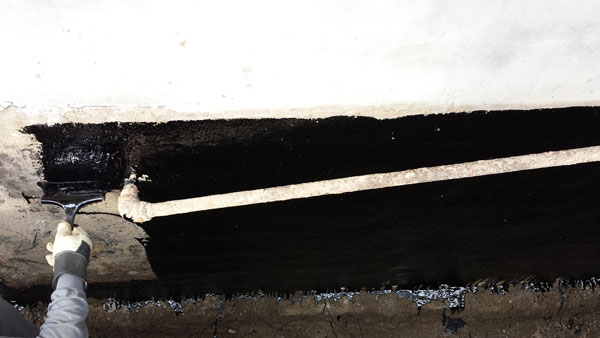
The sequence is straightforward but needs care. Excavation goes down to the footing, exposing the full wall. Crews clean the surface and patch honeycombs or tie holes. A proper waterproofing membrane follows, not the old brush-on tar. There are several products on the market, but the idea is the same, a continuous elastomeric layer that bridges small cracks. Over that, a dimpled drainage mat keeps backfill off the membrane and creates a vertical drainage plane to the footing.
At the base, install new footing drains. I prefer 100-millimetre smooth-wall PVC with perforations oriented right and left, fully surrounded by clear stone and wrapped in a non-woven geotextile. The stone acts as a filter and reservoir, the fabric keeps fines out. Slope the pipe gently to a sump pit or an approved storm outlet. Include a cleanout riser to grade at least at the corners. Those cleanouts save a lot of excavation if you need to flush the line later.
Backfill choice matters. Free-draining granular material against the wall reduces hydrostatic pressure and allows the mat to work. If you must reuse native clay, do it in lifts and compact carefully, and expect more water to press on the wall until the system carries it away. The top 15 to 30 centimetres should be clay or a clay cap so surface water sheds away rather than running straight down.
The trade-off is cost and disruption. Exterior systems often run higher than interior options because of excavation, landscaping repair, and access issues near decks or additions. In tight side yards, hand work or temporary removal of structures may be needed. On the other hand, you gain protection for the wall itself and reduce the load on the interior sump during storms.
Interior drainage when exterior access is limited
Interior systems shine when you cannot practically dig outside. Finished driveways, property lines tight to the wall, or mature landscaping can make exterior work hard to justify.
The typical interior approach cuts a trench in the slab along the perimeter, just inside the wall. Crews remove a narrow strip of concrete, expose the top of the footing, and place a perforated pipe in clean stone. The pipe drains to a sump pit. A wall membrane or cove detail directs water from the wall surface into the trench. Afterward, the trench is re-concreted.
This does two things. It relieves hydrostatic pressure under the slab and collects seepage at the cove joint. It does not keep the wall itself dry. For concrete block walls, that distinction matters. Blocks can still take on moisture and slowly degrade if exterior water pressure remains high. I have seen interior-only systems perform well for decades in tight clay with reliable sumps, but if a customer plans to finish the basement walls, I favor exterior waterproofing where feasible to keep building materials away from chronic damp.
Interior systems also depend on power and mechanical components. When the pump fails, water has nowhere to go. That is where redundancy and maintenance come in.
Sump pump systems that work in London winters
A sump pit should be large enough to allow a reasonable pump cycle time. A common size is around 18 inches in diameter and 24 to 30 inches deep, with a sealed lid that still allows service. Sealed lids cut humidity and odors, and if you add a radon mitigation system in the future, they are much easier to integrate.
Pump sizing is not guesswork. Look at the head height to the discharge, the length of run, and the number of elbows. A typical residential setup might call for a pump that delivers 40 to 60 litres per minute at 3 to 4 metres of head, but homes with high inflow during storms can need more. I look for cast-iron or stainless housings for better heat dissipation and longevity. Avoid cheap pedestal pumps unless access is tight and budgets are strict.
Check valves are mandatory, and a quiet one is worth the slight extra cost. Discharge lines should be at least 1.25 inches internal diameter, increasing to 1.5 inches for high-flow pumps, and they need to slope to drain. I see a lot of pipes that hold a slug of water and freeze solid along the outside wall. In London’s winters, you want an air gap or a freeze relief near the wall, and the final outlet must terminate far enough from the house that water does not return to the footing. Burying the line is fine, but maintain slope and plan for an outlet that will not ice over or get crushed by snow clearing.
Power failures track major storms. A battery backup pump is an insurance policy I strongly recommend. Choose a true pump plus battery system, not just a small utility pump thrown in as an afterthought. The better units move meaningful water for several hours and include alarms that text your phone. Water-powered backups exist, using municipal pressure to drive a venturi pump, but check local code and practicality. They consume a lot of water and need reliable pressure even during citywide storm events.
Maintenance is simple but often ignored. Pull the lid, lift the float, and watch the pump run a couple of times a year. Clean the pit of silt and debris. Exercise the check valve. Inspect the discharge outlet seasonally to make sure it is open and not discharging into a depression.
Backwater valves and sewer considerations
A wet basement is not always groundwater. In older London neighborhoods, sewer backups during intense storms can flood basements through floor drains and low fixtures. A mainline backwater valve on the sanitary line is a proven defense. It allows normal outflow but closes when sewer pressure reverses.
Placement and slope are critical. The valve needs to be accessible for inspection and cleaning. Municipal bylaws Go to the website and the Ontario Building Code guide installation details, and many jurisdictions require a permit. Some Ontario municipalities offer subsidies for backwater valves and sump upgrades. Programs change, so check current City of London information and confirm eligibility and approved contractors before you count on any funding.
One absolute rule bears repeating, never connect sump pumps, downspouts, or foundation drains to the sanitary sewer. It is illegal in most places and contributes to overloading during storms.
Fixing cracks, joints, and structural issues
Not all cracks are equal. Hairline shrinkage cracks in a poured wall can be injected with polyurethane to stop seepage. It is a quick, clean interior fix, and I have had excellent results. Epoxy injection is the choice for structural repairs where a crack needs to be bonded.
With concrete block walls, water often seeps through mortar joints or wicks through the block cores. Injections are trickier. Sometimes we core the blocks and drain them into an interior system, paired with exterior waterproofing to stop the inflow. Bowed or bulged walls need structural attention, which can include carbon fiber straps or steel braces. Pair structural repairs with drainage upgrades, or you will keep fighting the same forces that created the problem.
If you are planning basement finishing, do not trap moisture. Use rigid foam against the wall to control condensation, then build a decoupled stud wall with breathable finishes. Avoid poly vapor barriers against concrete in our climate, they often create a cold condensing surface and mold risk. Dehumidification in summer helps, especially in homes where the air conditioning does not run much.
Yard drainage that cooperates with the house
Sometimes the issue is not the foundation at all, but where the lot sends its water. I walk properties and look for ruts and stains that tell the story after a storm. If water from the rear neighbours crosses your yard toward your wall, you need a path for it. That might be a swale or a shallow French drain.
A French drain is not a magic sponge, it is a controlled trench with a perforated pipe in stone, wrapped in fabric, sloped to daylight or a dry well. It collects and conveys. In tight clays, a dry well must be generously sized or it will simply fill and sit. Rain gardens can help by holding and using stormwater, but they need to be placed where they intercept sheet flow, not tucked against the foundation as a decorative afterthought.
Driveway trench drains at garage entries keep heavy stormwater from rolling into the slab and migrating to the basement wall. The drains must connect to a legal discharge and be sized to catch the volume without clogging instantly.
Putting the pieces together without overbuilding
Homeowners often ask for the single best fix. The better question is what sequenced set of upgrades will stop the wet basement most efficiently. A lot of wet basement London, Ontario projects end up as combinations. Improve the roof drainage and grading, add an interior drain and sump where exterior excavation is blocked, and leave exterior waterproofing for a future addition. Or bite off the exterior on the worst wall first, the side that catches the north wind and drifted snow, then complete the other sides later.
Budget is real. Exterior foundation waterproofing and new weeping tile on a side wall might start in the mid four figures and rise with access challenges and length. Full perimeters run higher. Interior perimeter drains and a quality sump system often come in lower, depending on slab thickness, obstacles, and tie-ins. Grading, gutters, and downspout work are relatively modest costs with outsized effect.
I sometimes share a simple prioritization rule of thumb. Stop the roof overflow and move the downspouts, fix the grade, then tackle foundation drainage. Each layer you correct reduces the load on the next. It is tempting to pour money into interior coatings and paints first, but those are often the least durable dollars spent.
A five-point field checklist before you hire anyone
- Watch the house during a real rain and note where water overflows or pools for more than an hour after the storm. Measure slopes around the foundation and look for negative grade within the first two metres. Confirm where each downspout goes, how far the extension carries water, and whether any pipes tie into unknown underground connections. Open the sump lid, test the pump and alarm, and trace where the discharge line terminates outside. Photograph and date any cracks, efflorescence lines, or damp spots to see if they change with season and weather.
Choosing interior vs exterior in a real London example
A recent Westmount job had textbook symptoms. After heavy rain, the southeast corner of the finished basement showed damp carpet along the baseboard. Outside, a decorative bed had been raised over the years until mulch sat almost at the brick ledge. The downspout on that corner ended at a short elbow and a splash block that had settled into a divot.
We regraded the bed, dropped the soil and mulch 20 centimetres, and extended the downspout 3 metres to a swale along the side yard. That alone cut the frequency of dampness by half. The homeowner wanted the basement finished soon, so we recommended exterior waterproofing and new footing drains along the two worst walls where access was straightforward, and an interior drain along the back wall tucked under a deck that would have cost more to remove and rebuild. We tied the interior system and the exterior drains to a new sealed sump with a primary and battery backup pump, and routed the discharge to a proper outlet along the rear fence, pitched to drain and protected from freezing. We also added a mainline backwater valve because the street has a history of surcharged sewers during summer storms.
That mixed approach respected the site constraints and delivered a dry basement through spring melt and several intense rains.
Permits, locates, and practicalities
Before digging or even trenching for downspouts, call for utility locates. London has plenty of buried services in side yards. If you plan an exterior system, expect some disruption. Protect air conditioning lines, gas meters, and cable. Plan where to stage soil and stone, and how to restore landscaping. On the interior, cover belongings and isolate the work area. Cutting concrete is dusty and noisy. Good contractors use shrouded saws and HEPA vacuums, but you will still want to protect finished spaces.
Backwater valves and some sump installations trigger permits. Experienced basement waterproofing London, Ontario contractors will know what the city requires, but it is still your home. Ask for drawings and clear scope descriptions. Warranties vary. A warranty that covers seepage at the treated section is reasonable. Be cautious of blanket promises that ignore obvious upstream issues, like gutters that still overflow or grading that slopes to the wall.
Moisture, air quality, and finishing spaces
Even after you stop bulk water entry, basements in our climate still need humidity control. In summer, a dehumidifier sized to the space keeps relative humidity under 60 percent. It prevents musty odors and protects finishes. Insulation choices matter too. Rigid foam against concrete creates a thermal break and a moisture-tolerant layer. Mineral wool in stud cavities does not trap water, and paperless drywall resists mold better than standard board. Do not place wood-based materials tight to concrete or against cold steel posts without a thermal break.
If the slab is thin or cracked, think about a vapor barrier under new flooring. Luxury vinyl plank over an appropriate underlayment handles basement conditions well. Avoid carpet in areas that have ever been damp unless you are completely confident in the drainage upgrades and are willing to run dehumidification steadily.
A stepwise plan that prevents overcorrection
- Fix roof collection and discharge. Size gutters, add downspouts, and extend outlets well away from the foundation. Correct surface grading and hardscape slopes, including window wells with proper drains and clear stone. Decide on foundation drainage: exterior where accessible for wall protection, interior where access or budget is tight, or a strategic combination. Install a reliable sump system with backup, a freeze-resistant discharge, and alarms, and verify that no storm water enters sanitary lines. Address cracks and structural issues, then finish the basement with moisture-smart assemblies and steady humidity control.
Final thoughts from the trench
Every dry basement I have delivered in London came from respecting water’s habits. It follows gravity, collects where the soil invites it, and presses until it finds a path. Your job is to give it an easier route away from the house at every stage. Do not skimp on the unglamorous details, the slope on a buried downspout, the cleanouts on footing drains, the quiet check valve, the battery that has actually been tested. Those are the places where projects earn their keep in the middle of a March thaw or an August deluge.
If you are staring at a wet basement, invest a little time in careful observation. Bring in a contractor who explains both interior and exterior options without pushing a one-size-fits-all solution. With the right sequence of drainage upgrades, basement waterproofing becomes a durable improvement, not a recurring chore. And in a city with our soils and seasons, that peace of mind is worth more than a shiny new paint on the walls.
Ashworth Drainage — Business Info (NAP)
Name: Ashworth DrainageAddress: 514 Hale St, London, ON N5W 1G8
Phone: (519) 660-9375
Website: https://www.ashworthdrainage.ca/
Email: [email protected]
Hours:
Monday: 9:00 AM – 5:00 PM
Tuesday: 9:00 AM – 5:00 PM
Wednesday: 9:00 AM – 5:00 PM
Thursday: 9:00 AM – 5:00 PM
Friday: 9:00 AM – 5:00 PM
Saturday: Closed
Sunday: Closed
Open-location code (Plus Code): XRR3+HV London, Ontario
Map/listing URL: https://maps.app.goo.gl/9kaoXAxRtJRP1ThS9
Embed iframe:
Socials (canonical https URLs):
Facebook: https://www.facebook.com/ashworthdrainage/
X: https://twitter.com/ashworthrules
Instagram: https://www.instagram.com/ashworthdrainage/
https://www.ashworthdrainage.ca/
Ashworth Drainage provides basement waterproofing and foundation repair services in London, Ontario and surrounding areas in Southwestern Ontario.
The company helps homeowners address wet basements, water intrusion, and drainage issues with solutions that fit the property’s conditions.
Service requests can include foundation repair, waterproofing options, sump pump and drainage-related work, and related assessments.
Ashworth Drainage is based at 514 Hale St, London, ON N5W 1G8.
To reach the team, call (519) 660-9375 or email [email protected].
Business hours are Monday to Friday 9:00 AM–5:00 PM, with the office closed Saturday and Sunday.
For directions and listing details, use the map listing: https://maps.app.goo.gl/9kaoXAxRtJRP1ThS9.
Popular Questions About Ashworth Drainage
What does basement waterproofing help prevent?Basement waterproofing is intended to reduce water intrusion and moisture problems that can lead to dampness, leaks, odors, and damage over time.
How do I know if I may need foundation repair?
Common signs can include visible cracks, water seepage, shifting or uneven areas, or recurring moisture problems; an on-site assessment is usually the best way to confirm causes and options.
What areas does Ashworth Drainage serve?
Ashworth Drainage serves London, Ontario and surrounding areas in Southwestern Ontario.
What are Ashworth Drainage’s hours?
Monday–Friday 9:00 AM–5:00 PM; Saturday closed; Sunday closed.
How can I contact Ashworth Drainage?
Phone: +1-519-660-9375
Email: [email protected]
Website: https://www.ashworthdrainage.ca/
Map: https://maps.app.goo.gl/9kaoXAxRtJRP1ThS9
Facebook: https://www.facebook.com/ashworthdrainage/
X: https://twitter.com/ashworthrules
Instagram: https://www.instagram.com/ashworthdrainage/
Landmarks Near London, ON
1) Kiwanis Park2) Western Fair District
3) Covent Garden Market
4) Victoria Park
5) Budweiser Gardens
6) Museum London
7) Fanshawe Conservation Area